Minimalist Branding Trends for Modern US Startups
Minimalist branding has become a defining visual language for modern US startups. It reflects how young companies want to be seen today: focused, efficient, and user-centric. Instead of loud colors, complex logos, and overflowing websites, more founders are choosing clarity, whitespace, and disciplined simplicity.
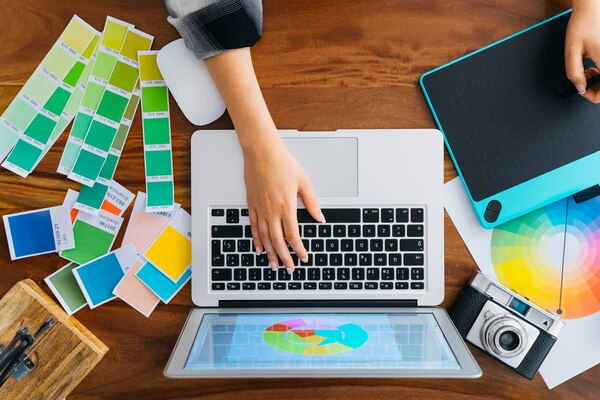
Below are the key minimalist branding trends shaping how US startups present themselves in 2024–2025—and how those trends connect to strategy, not just style.
1. Radical Simplicity in Logos
Startups are moving away from clever, illustrative logos toward extremely distilled marks:
- Clean wordmarks using simple, geometric or grotesque sans-serif typefaces
- Very limited use of symbols or icons—often just a subtle tweak to a letter
- Flat design with no gradients, shadows, or 3D effects
Why this works for startups:
- Scalability: Simple logos hold up equally well on app icons, pitch decks, social media avatars, and conference banners.
- Speed of recognition: Minimal forms are easier for users to recognize and recall, especially in crowded digital environments.
- Lower design risk: A clean wordmark is less likely to age badly than a trend-heavy, illustrative logo.
Common approaches:
- Using initials as a logo, especially for longer startup names
- Creating slight customizations in one letter (cutouts, ligatures, or extended lines)
- Designing logos in black first, then layering color choices afterward
2. Neutral, Soft, and Muted Color Palettes
Bold, high-saturation color is giving way to gentler palettes:
- Warm neutrals (beige, sand, cream, stone, taupe)
- Cool neutrals (slate, fog, soft gray, off-white)
- Muted accent colors (dusty blue, olive, rust, terracotta, desaturated teal)
This muted direction supports:
- Trust and calm: Particularly important for fintech, healthcare, and B2B SaaS startups where reassurance matters more than excitement.
- Accessibility and longevity: Low-saturation colors tend to feel less disposable and easier to live with across products and marketing.
- Versatility: Neutral bases can be paired with seasonal or campaign-specific accent colors without redesigning the whole identity.
A frequent pattern:
- 1–2 core neutrals for backgrounds
- 1 primary accent color for buttons and calls to action
- 1–2 subtle supporting accent colors for charts, illustrations, or tags
3. Typography as the Main Identity Element
In minimalist branding, type often is the brand. With fewer decorative elements, the choice and treatment of typefaces becomes central:
- Strong preference for sans-serif families (neo-grotesque, geometric, and humanist)
- Highly legible text at multiple sizes for both product UI and marketing
- Distinctive typographic systems: spacing, hierarchy, and weight changes used as a signature style
Trends in type usage:
- One primary typeface used everywhere (product, website, decks) for cohesion
- Occasional pairing of a clean sans-serif with a subtle serif for headlines in more editorial brands
- Generous line spacing and larger font sizes to support readability on mobile and high-resolution screens
For early-stage startups, typography is a powerful way to look polished without heavy design investment.
4. Generous Whitespace and Grid-Based Layouts
Whitespace is no longer viewed as “empty” but as a core design tool:
- Spacious margins and padding around sections, headings, and imagery
- Strict grid systems that create rhythm and predictability
- Limited text per screen with clear visual anchors (one message, one action)
Benefits for young companies:
- Clarity of message: With fewer competing elements, value propositions stand out.
- Perceived sophistication: Clean layouts are often associated with higher-end, considered brands.
- Better performance: Simpler layouts typically load faster and work better across devices.
This is especially visible in:
- Landing pages with a single, bold headline, one visual, and one clear CTA
- “Card”-based layouts that group information into digestible sections
- Product pages that highlight only the most critical features, not exhaustive lists
5. Iconography and Micro-Illustrations, Not Full Illustrations
Startups are abandoning complex, character-driven illustration styles in favor of:
- Very simple line icons
- Minimalist pictograms with consistent stroke weight
- Tiny, abstract illustrations used sparingly for emphasis, not as main visuals
Why this shift:
- Speed and cost: Minimal icon systems are faster to produce and maintain than custom illustration sets.
- Consistency in UI: Icons integrate more naturally into interfaces than narrative illustrations.
- Avoiding overused styles: Flat, quirky human characters are now seen as generic and dated in many categories.
Design teams are focusing on:
- Tight icon sets (20–60 icons) that cover only essential actions or concepts
- Black or single-color icon systems to keep the visual language coherent
- Micro-animations on hover or click instead of large, decorative illustrations
6. Systematic Design: Brand as a Product
Minimalist branding for US startups is increasingly built like a design system, not a one-off logo project:
- Reusable components (buttons, cards, badges, tags, section layouts)
- Documented spacing rules, color tokens, and typography scales
- Consistency across marketing site, web app, mobile app, and pitch materials
This product-like approach to brand:
- Reduces decision fatigue for small teams
- Speeds up creation of new pages, decks, and campaigns
- Ensures the brand feels the same everywhere without constant designer oversight
Minimalism supports this by keeping the system small and manageable:
- Fewer type styles, fewer colors, fewer component variations—used more consistently.
7. Quiet Motion and Micro-Interactions
Instead of loud animations, startups are using very restrained motion:
- Subtle fades, slides, and parallax that support storytelling but don’t dominate
- Micro-interactions on hover, click, or scroll that provide feedback
- Loading states and transitions that feel smooth, not flashy
The goal:
- Perception of polish: Light motion can make even a simple interface feel premium.
- Guiding attention: Animations highlight where to look or what to do next.
- Maintaining simplicity: Motion enhances clarity instead of adding noise.
Common uses:
- Button hover states with slight color and shadow changes
- Smooth page transitions with short duration and limited easing
- Animated data visualizations that reveal information progressively
8. Copywriting Minimalism: Fewer Words, Sharper Messages
Visual minimalism is matched by tighter messaging:
- Short, declarative headlines focused on outcomes (“Get paid faster,” “Ship in days, not months”)
- Minimal jargon and fewer buzzwords, especially in B2B tech
- Clear hierarchy: one core message, a short supporting explanation, and one CTA
Patterns in copy:
- “Hero” sections that state the core value in a single sentence
- Bullet lists for benefits instead of dense paragraphs
- Conversational, direct language replacing corporate tone
This aligns the brand voice with the rest of the visual identity: stripped of excess and focused on the essentials.
9. Purpose-Driven Minimalism, Not Aesthetic Minimalism
The most effective modern startup brands don’t adopt minimalism as a fashion choice; they use it to support specific goals:
- Faster onboarding and clarity of product value
- More trust in sensitive categories (money, health, security, infrastructure)
- Leaner operations with fewer design dependencies and faster iteration
Minimal branding helps startups:
- Ship earlier: It’s easier to finalize a lean design system than an ornate one.
- Pivot more safely: With fewer highly stylized elements, re-positioning feels less disruptive.
- Communicate more clearly: Customers understand what’s important and why it matters.
Minimalism becomes less about looking like other startups and more about removing everything that doesn’t help the user.
10. Balancing Minimalism with Brand Distinctiveness
The main risk of minimalist branding is sameness. Many US startups now share:
- Similar muted color schemes
- Very similar sans-serif typography
- Nearly identical hero layouts
To avoid blending in, leading teams are adding one or two strong, intentional points of difference:
- A distinctive hero type treatment (unexpected scale, vertical type, or strong spacing style)
- A unique, but simple, color accent used consistently across touchpoints
- A specific genre of imagery (e.g., macro textures, architectural photos, data visualizations)
- A confident, opinionated voice in copy that stands out even in minimalist layouts
The emerging formula is:
Minimalist foundation + 1–2 bold, consistent, ownable elements.
This balance keeps the experience clean and modern while still making the brand recognizable.
11. Practical Guidelines for Startups Adopting Minimalist Branding
For early-stage US startups considering or refining a minimalist approach:
- Limit your palette to 3–5 main colors and stick to them everywhere.
- Choose one primary typeface and build a clear scale of sizes and weights.
- Design your logo in black first; then apply color only if it adds real value.
- Define a basic grid and spacing system and use it for all layouts.
- Remove any section, element, or sentence that doesn’t support a specific goal.
- Add one distinctive element (accent color, layout quirk, imagery approach, or voice) to avoid generic minimalism.
Minimalist branding is not about making things empty; it is about making them essential. For modern US startups competing for attention, talent, and trust, that focus on the essential has become one of the most powerful branding tools available.